The history
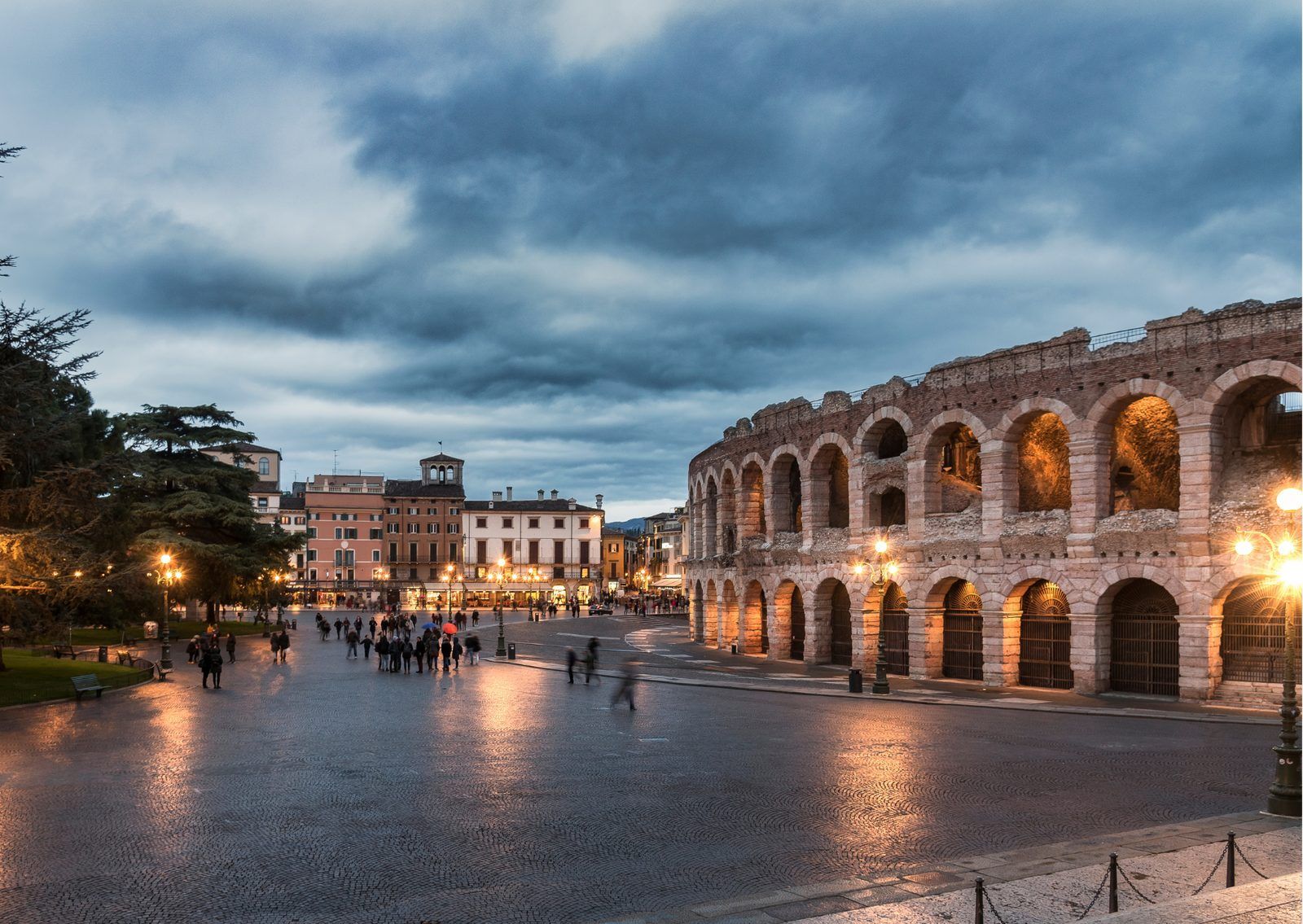
One of the treasures of Verona, a few steps from the Arena.
Palazzo dei Mutilati
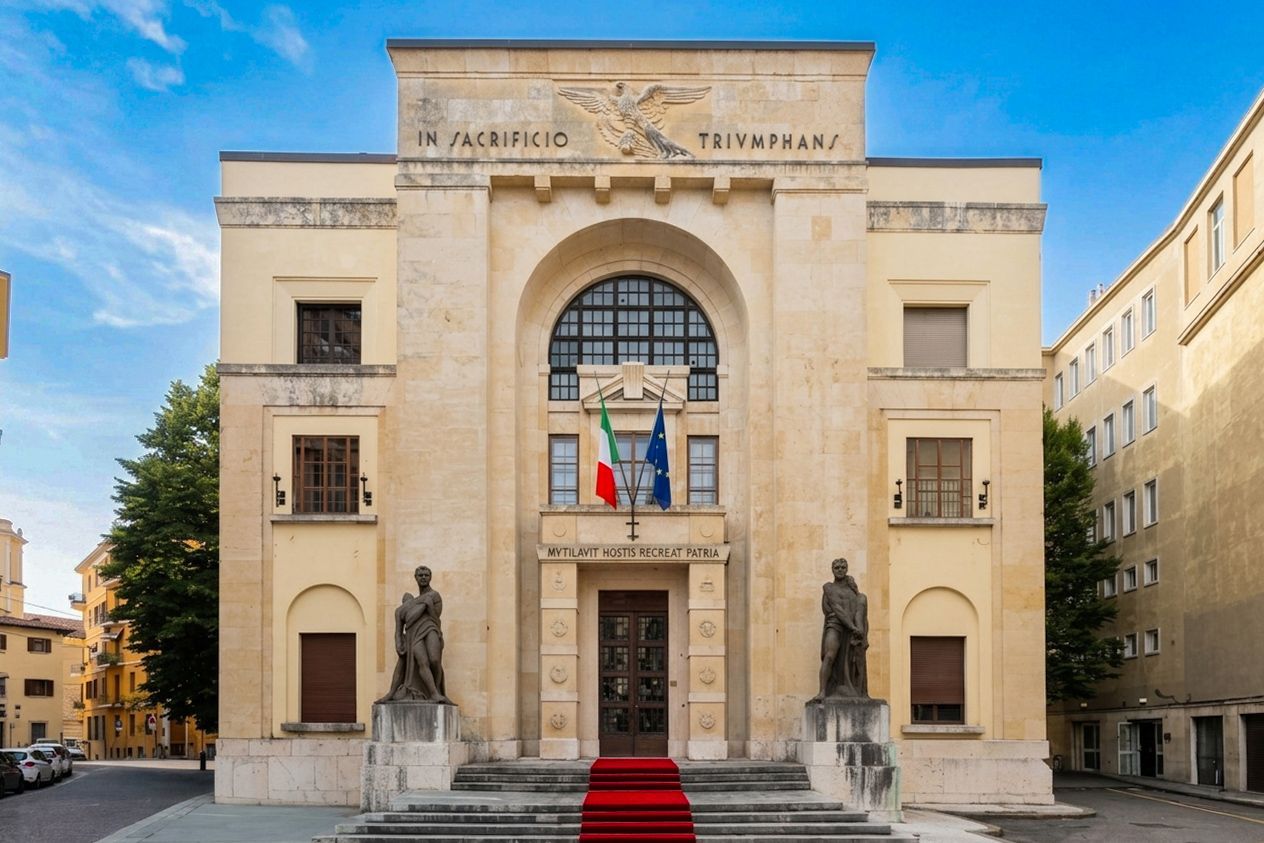
Inaugurated on 16 September 1934 to a design by Arch. Prof. Francesco Banterle of Verona, the building opens to the public one of the hidden treasures of the city.
The portal is guarded by two large sculptural groups, the work of the architect's brother, the sculptor Ruperto Banterle: originally carved in Quinzano stone and recast in bronze in 1960, they depict the sacrifice of the dying soldier and the brotherhood of the comrade who holds him up. Above the entrance runs the inscription In Sacrificio Triumphans.
A place of memory that preserves intact furnishings, symbols and works of deep historical and civic value.
1934
Year of inauguration
170
seats
In Sacrificio Triumphans
The inscription on the façade
Then and now
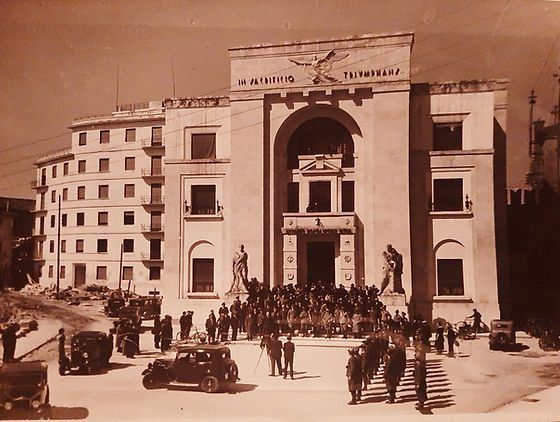
The foundation stone was laid in May 1933 and can still be picked out, pink, with the association's coat of arms carved into it. The building was raised by ANMIG, the national association of war wounded and disabled veterans, with money from public bodies, from private donors and from a great many citizens of Verona.
The façade echoes a triumphal arch and belongs to the monumental architecture of the nineteen-thirties. It stands over the course of the Adigetto, the canal covered in that same decade to let the city grow. A second inscription runs across the portal, Mutilavit hostis recreat patria: the enemy maimed him, the homeland gives him life again.
The atrium and the staircase
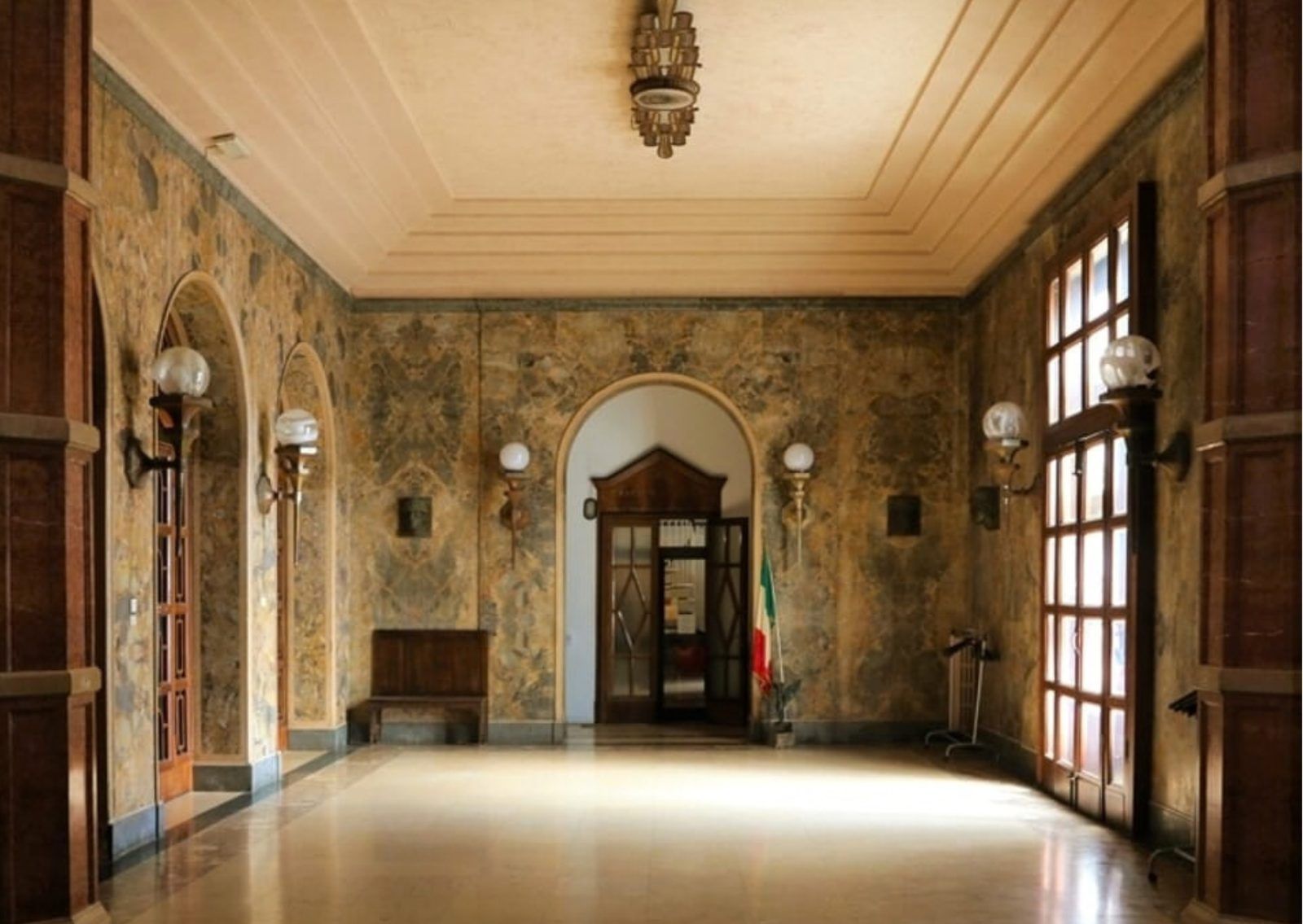
You come in through a marble atrium, with a great chandelier and four heads of fighting men carved by Ruperto Banterle; from here a staircase clad in coloured marble climbs to the upper floors. The briarwood furniture, designed by the architect himself, is still the furniture of 1934.
Sala Antonio Girelli
The hall is dedicated to Prof. Antonio Girelli (1894-1970), first president of the Verona section of ANMIG, in office until 1967: the building went up under his presidency.
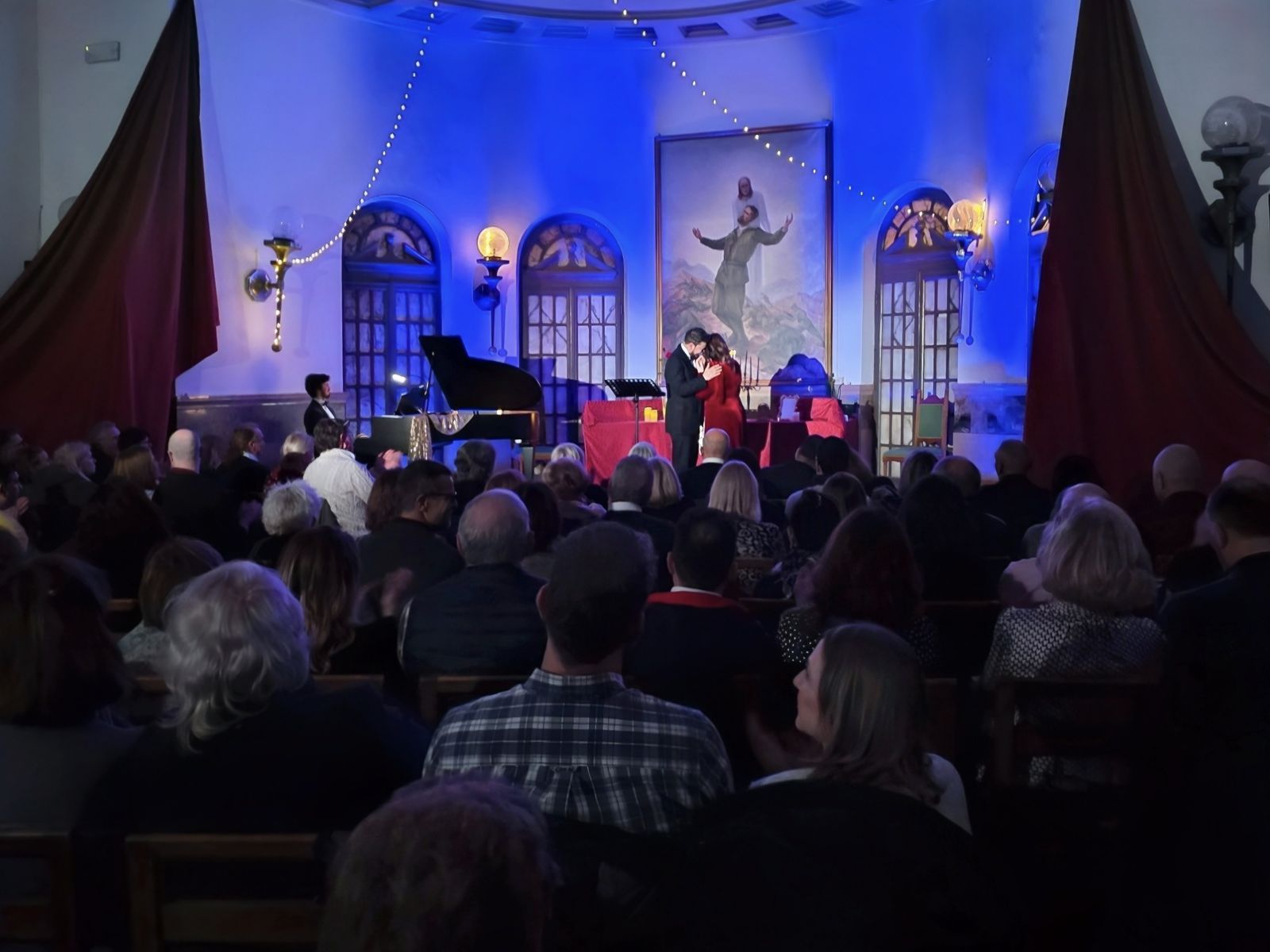
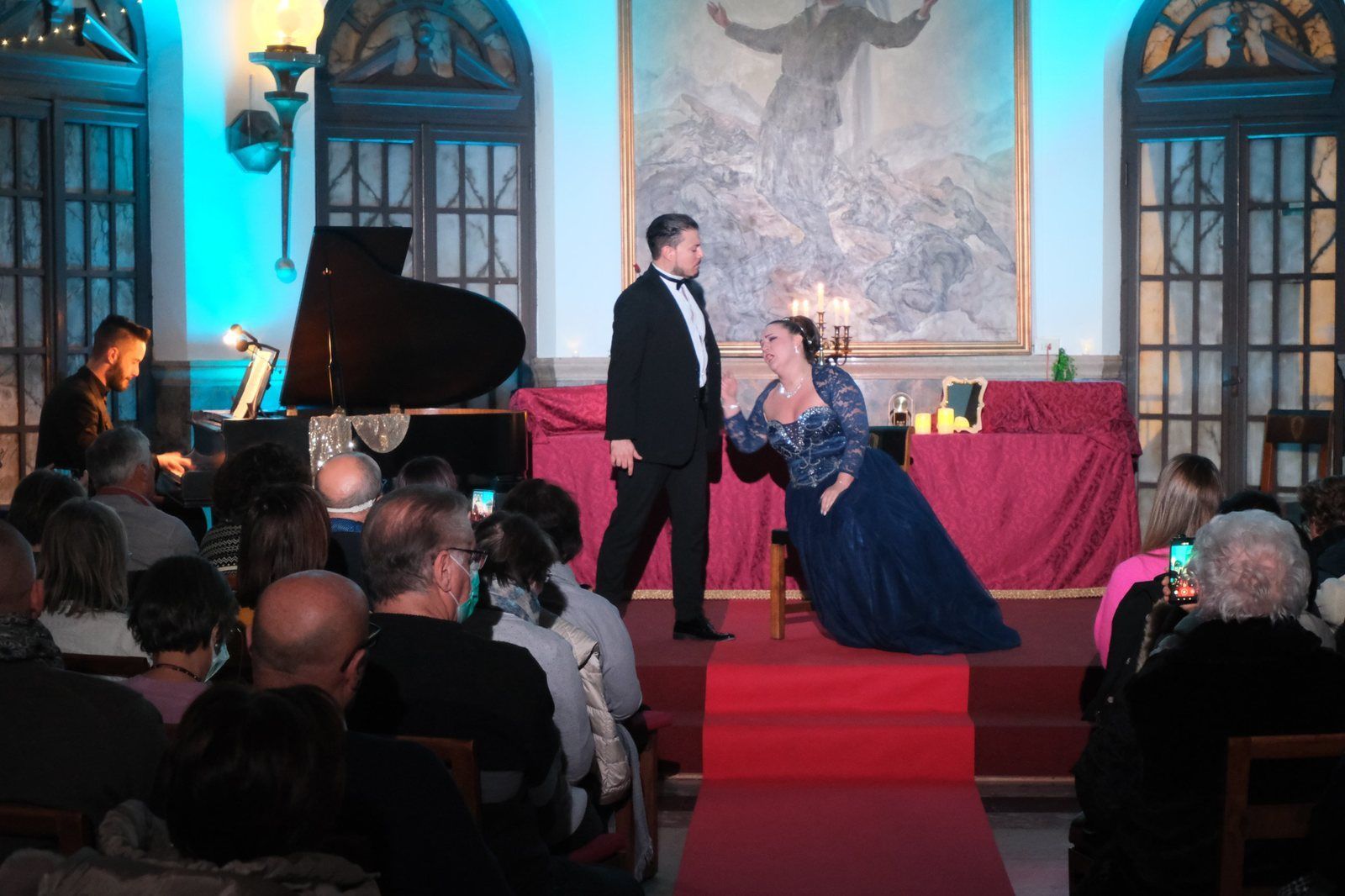
It lies on the ground floor and is made up of a vestibule and the hall itself, which seats one hundred and seventy. The chairs are all in the original wood.
The wood and alabaster lining its walls give it an acoustic kind to singing, one that carries the voice with no need of amplification: that is why the hall became the home of our concerts.
 The building is the seat of the Verona section of ANMIG, which built it and keeps it.
In the heart of the historic centre
The building stands in the heart of the historic centre, a few level minutes on foot from the Arena and from Piazza Bra. Those spending the day among the streets of Verona find the hall on their way.